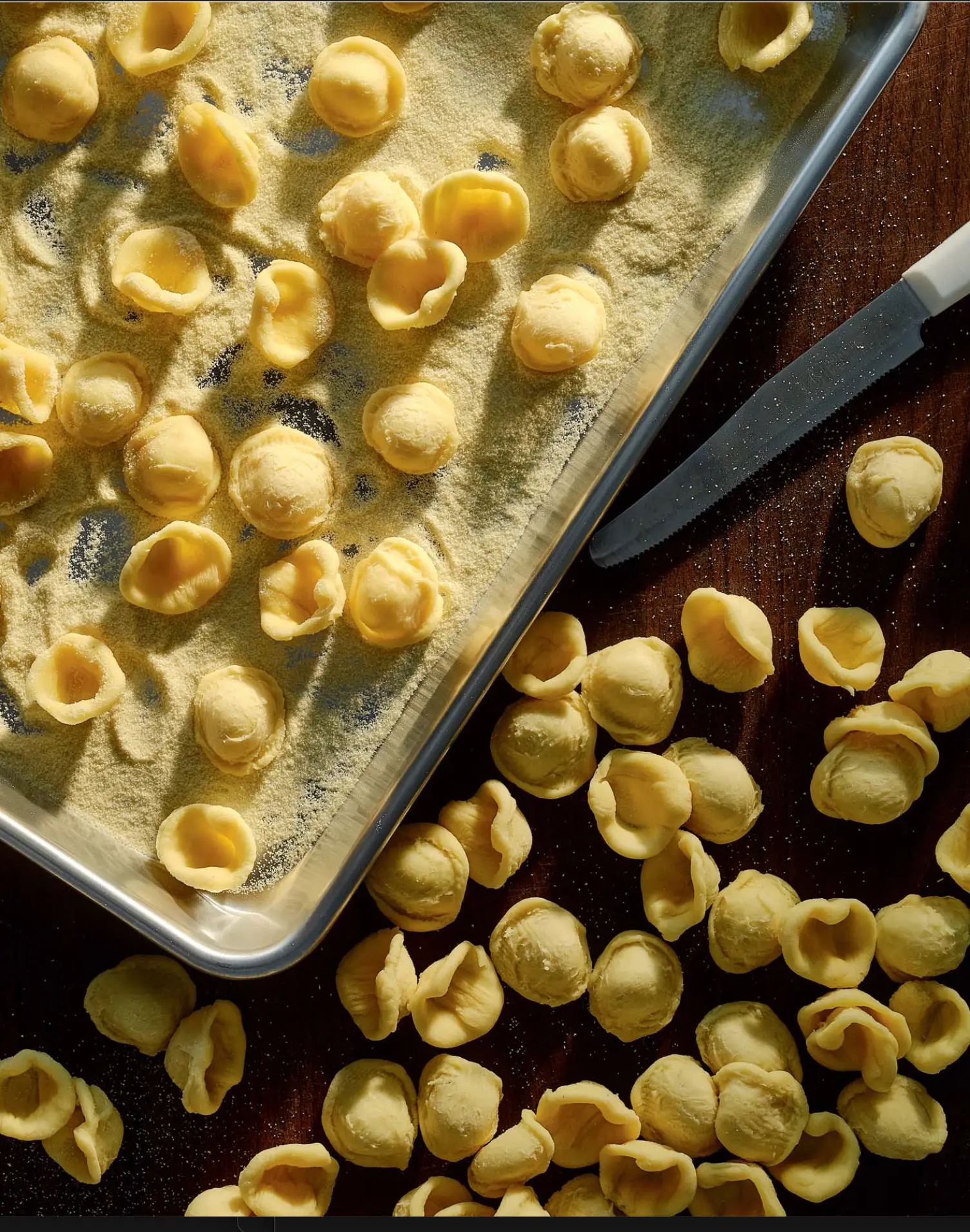
Soft Wheat & Water Pasta Dough
There’s something particularly refreshing about making pasta dough (or anything, really) with your own two hands, as if returning to a near-forgotten, simpler way of life. Making dough by hand is, of course, the most traditional technique, and the one that grandmothers and chefs alike swear by. It’s often called the “well method”—referring to the process of gradually incorporating the liquid into a flour “well”—and I do think it yields dough with a marginally superior texture, mostly because you have total control.
Servings: 4 people
Ingredients
- 400 grams a generous 2½ cups 00 or all-purpose flour
- 200 ml ¾ cup plus 4 teaspoons warm or tepid water
VARIATIONS
Pici Dough:
- 15 ml extra-virgin olive oil or 1 tablespoon, added to the water
Corzetti della Valpolcevera Dough:
- 2 large eggs Replace half of the water with 100 grams of olive oil or about 2 large eggs.
Instructions
Make the dough:
- Weigh and combine the flour(s) in a wide mixing or serving bowl.
- Weigh the liquid(s) and, if applicable, whisk them together until smooth.
- Keep the flour in the bowl (this prevents runaway liquids) or turn it out onto a work surface.
- Make a wide “well” in the center with your fist, forming a wall of flour tall enough on all sides to contain the liquid.
- Pour the liquid into the well.
- Using a fork, gradually incorporate a portion of the flour, a couple of teaspoons or so at a time, from the inner rim of the well into the liquid in a circular motion (à la scrambled eggs) until a thick, custardy batter forms. You’ll use only about a quarter of the flour at this point; the majority will remain loose.

- Incorporate the remaining flour into the thickened liquid, either by:
- 1) pulling, folding, and pressing the flour into the center with your hands until it becomes a shaggy ball;
- 2) vigorously whisking the liquid and loose flour together with the fork until all the liquid is evenly distributed (and it looks like little flaky pebbles); or
- 3) if you’re working on a flat surface, cutting the flour into the liquid with the help of a bench scraper. If it looks like a total mess—sticky here, flaky there—you’re doing it right.
- If you’ve been using a bowl, transfer the mixture to a flat surface, along with any large flaky pieces. It’s also totally normal to have some flour left behind.

Knead the dough:
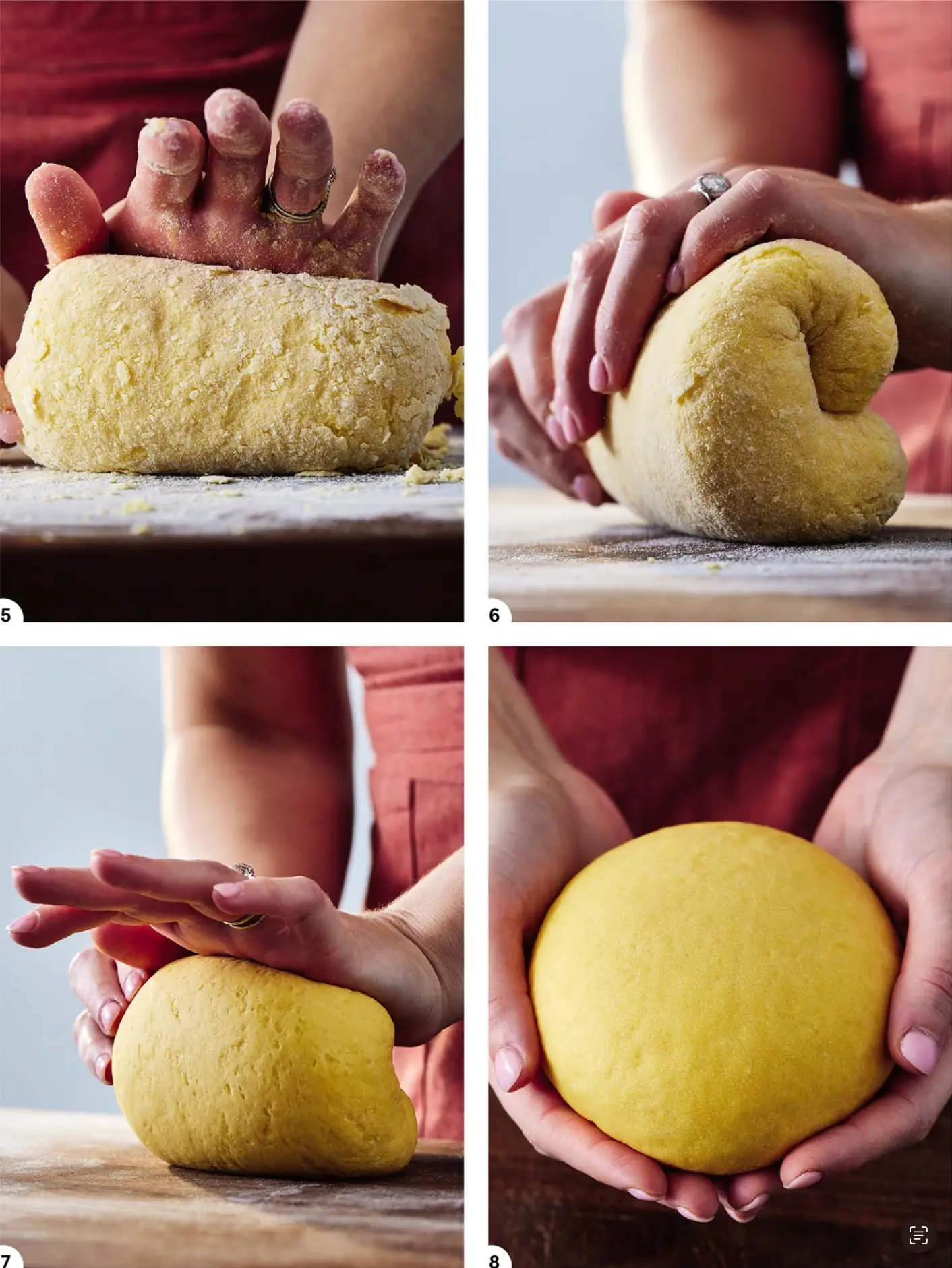
- Knead the dough vigorously however works best for you (don’t be shy; you can’t overwork it). I like to push it forward with the heel of my hand, then fold it over on itself about halfway. Do this a few times in one direction, then rotate the dough 90 degrees and repeat, shifting 90 degrees every few strokes.

- Once the dough starts to come together, brush away any remaining flaky pieces. Always give it time before adding flour or water—more often than not, it will sort itself out after a few minutes.
- Then, if the dough still feels dry, add a small amount of water with your fingers to the dry areas and knead until smooth, repeating as necessary; if it feels very soft and sticky, work in more flour until it firms up.
- After about 5 minutes, cover the dough tightly and completely in plastic wrap or under an overturned bowl (you can also use a clean shower cap or snug Tupperware container).
- Let it rest for 5 to 10 minutes.
- Uncover and knead the dough until it’s smooth and firm, pliable but not soft, 3 to 5 minutes more. (This two-part knead makes the dough smoother; if preferred, skip the first rest period and knead the dough for about 10 minutes.)
- When it bounces back from a light touch to the surface, cover the dough tightly and completely once more.
- Let it rest at room temperature for about 30 minutes, depending on the pasta you’re making (see here for suggested rest times).
Notes
Makes about 21 ounces; serves 4
USE IT WITH
Corzetti della Valpolcevera (here) • Lagane (here) • Pici (here) • Strozzapreti (here)What Should Pasta Dough Look and Feel Like?
- Think of pasta dough like Play-Doh that spends a lot of time at the gym. It’s smooth and pliable, but also firm and resilient. It’s not soft or sticky like many bread doughs, nor is it dry and crumbly like pastry dough. Some might describe it as heavy and dense. It springs back to the touch.
- While you’re in the thick of it, making dough will feel messy and chaotic. But when you’re done, look at the dough and make a mental checklist of these visual and textural cues. If the dough sticks to your hands or work surface, give it a few more dustings of flour; if it’s tough and dry, a small amount of water should do the trick.
- Still, environmental factors, particularly humidity, can affect a dough’s texture. A hot and humid kitchen will encourage stickiness, so maybe hold back a little water at the start or know you might need to reach for more flour; a cold and dry kitchen will do the opposite, so keep extra water nearby. Trust your intuition and remember that if you make a wrong turn, you can always course-correct because pasta is forgiving. Accept that every dough you make will be a little different and love them all the same. The process only gets easier over time.