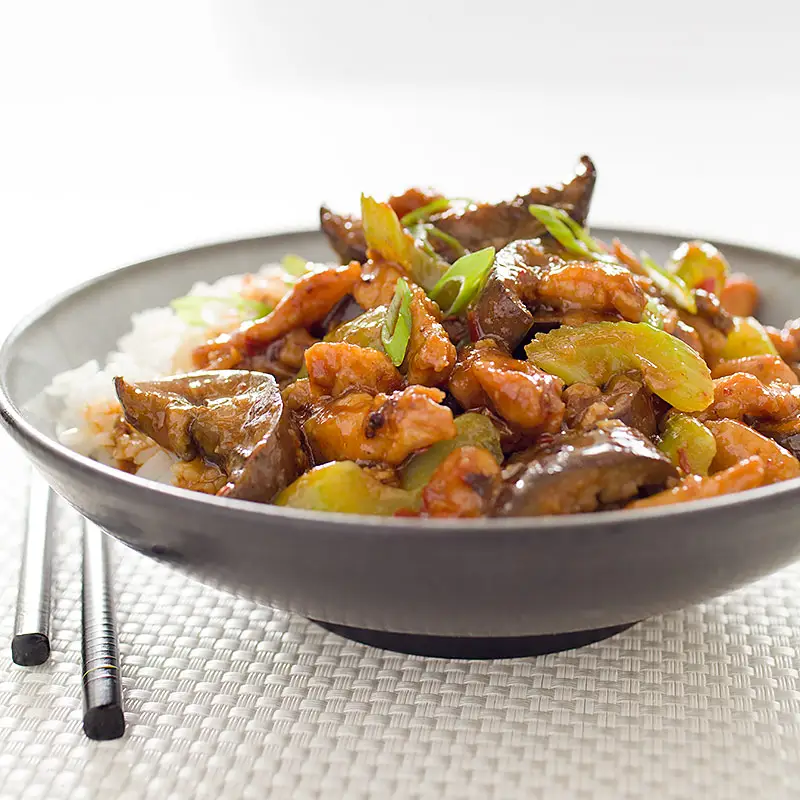
Sichuan Stir-Fried Pork in Garlic Sauce
When it comes to replicating this classic Chinese stir-fry, the biggest issue is vexingly familiar: how to cook tender, juicy pork. To keep the pork tender and juicy in this flavorful stir-fry, we first soak the meat in a baking soda solution, which tenderizes and moisturizes the meat. Before stir-frying, we coat the treated pork in a velvetizing cornstarch slurry, which helps it retain moisture as it cooks. And the secret to the sauce's silken texture and rich flavor? Ketchup and fish sauce, both high in glutamates.
Servings: 4
Ingredients
Sauce
- ½ cup low-sodium chicken broth
- 2 tablespoons sugar
- 2 tablespoons soy sauce
- 4 teaspoons Chinese black vinegar
- 1 tablespoon toasted sesame oil
- 1 tablespoon Chinese rice wine or dry sherry
- 2 teaspoons ketchup
- 2 teaspoons fish sauce
- 2 teaspoons cornstarch
Pork
- 12 ounces boneless country-style pork ribs trimmed
- 1 teaspoon baking soda
- ½ cup cold water
- 2 teaspoons Chinese rice wine or dry sherry
- 2 teaspoons cornstarch
Stir-Fry
- 4 garlic cloves minced
- 2 scallions white parts minced, green parts sliced thin
- 2 tablespoons Asian broad-bean chili paste
- 4 tablespoons vegetable oil
- 6 ounces shiitake mushrooms stemmed and sliced thin
- 2 celery ribs cut on bias into 1/4-inch slices
Instructions
FOR THE SAUCE:
- Whisk all ingredients together in bowl; set aside.
FOR THE PORK:
- Cut the pork into 2-inch lengths, then cut each length into 1/4-inch matchsticks.
- Combine the pork with baking soda and water in bowl. Let sit at room temperature for 15 minutes.
- Rinse the pork in cold water. Drain well and pat dry with paper towels.
- Whisk the rice wine and cornstarch together in a medium-sized bowl.
- Add the pork and toss to coat.
FOR THE STIR-FRY:
Cook the vegetables:
- Combine the garlic, scallion whites, and chili paste together in a bowl.
- Heat 1 tablespoon of oil in a 12-inch nonstick skillet over high heat until just smoking.
- Add the mushrooms and cook, stirring frequently, until tender, 2 to 4 minutes.
- Add the celery and continue to cook until the celery is crisp-tender, 2 to 4 minutes.
- Transfer the vegetables to separate bowl.
Cook the aromatics:
- Add the remaining 3 tablespoons of oil to the now-empty skillet and place over medium-low heat.
- Add garlic-scallion mixture and cook, stirring frequently, until fragrant, about 30 seconds.
- Transfer 1 tablespoon of the garlic-scallion oil to a small bowl and set aside.
Cook the pork:
- Add the pork to the skillet and cook, stirring frequently, until no longer pink, 3 to 5 minutes.
- Whisk the sauce mixture to recombine and add to the skillet.
- Increase the heat to high and cook, stirring constantly, until the sauce is thickened and the pork is cooked through, 1 to 2 minutes.
Finish and serve:
- Return the vegetables to the skillet and toss to combine.
- Transfer to a serving platter, sprinkle with scallion greens and reserved garlic-scallion oil, and serve.
Notes
- If Chinese black vinegar is unavailable, substitute 2 teaspoons of balsamic vinegar and 2 teaspoons of rice vinegar.
- If Chinese broad bean chili paste (doubanjiang) is unavailable, substitute 2 teaspoons of Asian chili-garlic paste or sriracha.
- Serve with steamed white rice.