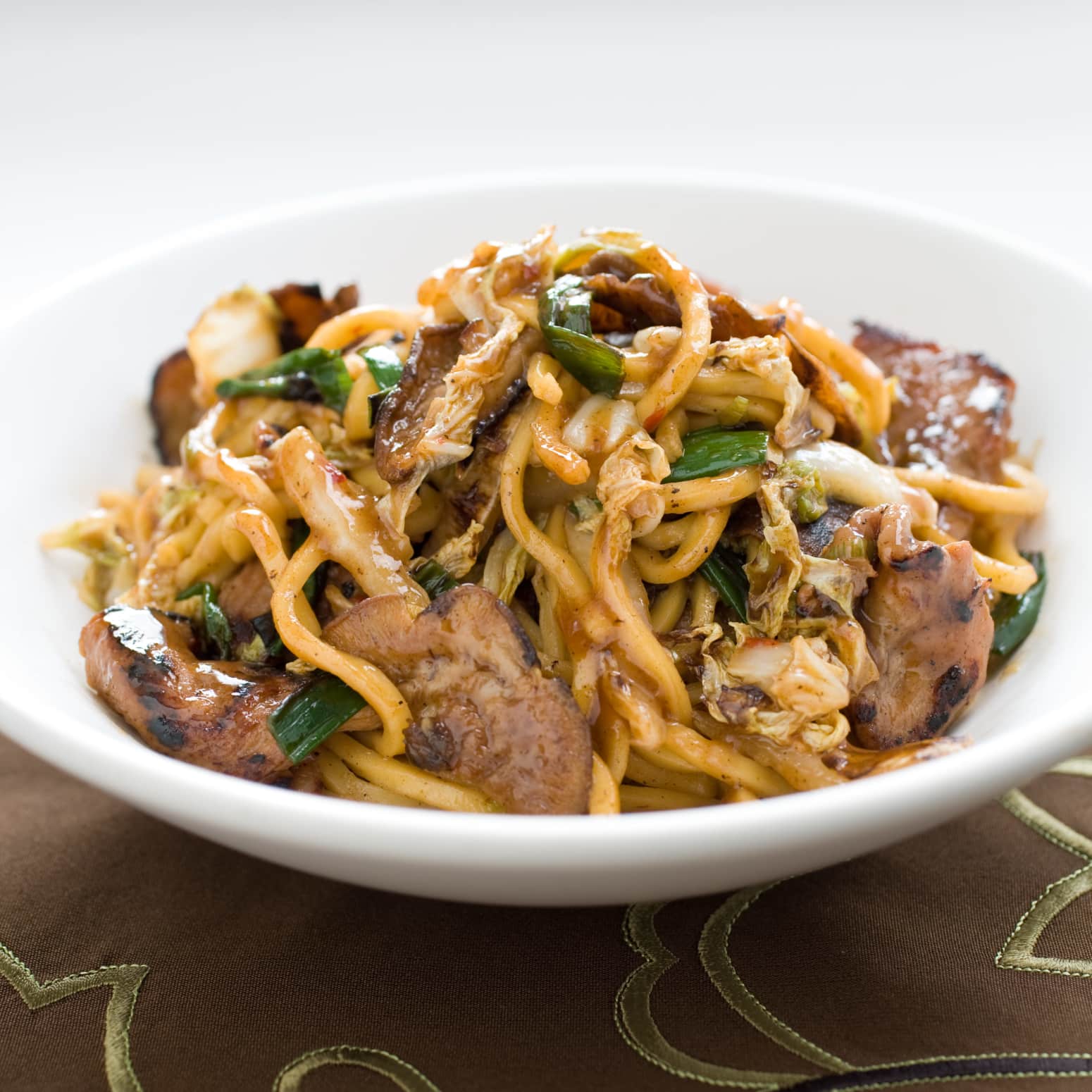
Pork Stir-Fry with Noodles (Lo Mein)
For a lo mein recipe with chewy noodles tossed in a salty-sweet sauce and accented with bits of smoky pork and still-crisp cabbage, we seared strips of meat from country-style pork ribs over high heat, adding liquid smoke for barbecue flavor. We used our meat marinade as a sauce base, with a little chicken broth and a teaspoon of cornstarch for added body.
Servings: 4
Ingredients
- 3 tablespoons soy sauce
- 2 tablespoons oyster sauce
- 2 tablespoons hoisin sauce see note
- 1 tablespoon toasted sesame oil
- ¼ teaspoon five-spice powder
- 1 pound boneless country-style pork ribs trimmed of surface fat and excess gristle and sliced crosswise into ⅛-inch pieces (see note)
- ¼ teaspoon liquid smoke optional
- ½ cup low-sodium chicken broth
- 1 teaspoon cornstarch
- 2 medium garlic cloves minced or pressed through a garlic press (about 2 teaspoons)
- 2 teaspoons grated fresh ginger
- 4 ½ teaspoons vegetable oil
- 4 tablespoons Shaoxing wine or dry sherry, see note
- ½ pound shiitake mushrooms stems trimmed, caps cut in halves or thirds (about 3 cups)
- 2 bunches scallions whites thinly sliced and greens cut into 1-inch pieces (about 2 cups)
- 1 small head Napa or Chinese cabbage halved, cored, and sliced crosswise into ½-inch strips (about 4 cups)
- 12 ounces Chinese egg noodles fresh or 8 ounces dried linguine (see note)
- 1 tablespoon Asian chili-garlic sauce
Instructions
- Bring 4 quarts of water to a boil in a Dutch oven over high heat.
Marinate the pork:
- Whisk the soy sauce, oyster sauce, hoisin sauce, sesame oil, and five-spice powder together in medium bowl.
- Place 3 tablespoons of the soy sauce mixture in a large zipper-lock bag; add the pork and liquid smoke, if using.
- Press out as much air as possible and seal the bag, making sure that all of the pieces are coated with the marinade.
- Refrigerate for at least 15 minutes or up to 1 hour.
Prepare the sauce:
- Whisk the broth and cornstarch into the remaining soy sauce mixture in a medium bowl.
- In a separate small bowl, mix the garlic and ginger with 1/2 teaspoon of vegetable oil; set aside.
Cook the pork:
- Heat 1 teaspoon vegetable oil in a 12-inch cast-iron or nonstick skillet over high heat until just smoking.
- Add half of the pork in a single layer, breaking up clumps with a wooden spoon.
- Cook, without stirring, for 1 minute.
- Continue to cook, stirring occasionally, until browned, 2 to 3 minutes.
- Add 2 tablespoons of wine to the skillet; cook, stirring constantly, until the liquid is reduced and the pork is well coated, 30 to 60 seconds.
- Transfer the pork to a medium bowl and repeat with the remaining pork, 1 teaspoon oil, and remaining 2 tablespoons wine.
- Wipe the skillet clean with paper towels.
Cook the vegetables:
- Return the skillet to high heat, add 1 teaspoon vegetable oil, and heat until just smoking.
- Add the mushrooms and cook, stirring occasionally, until light golden brown, 4 to 6 minutes.
- Add the scallions and continue to cook, stirring occasionally, until the scallions are wilted, 2 to 3 minutes longer; transfer vegetables to bowl with pork.
- Add remaining teaspoon vegetable oil and cabbage to the now-empty skillet; cook, stirring occasionally, until spotty brown, 3 to 5 minutes.
Sauce the stir-fry:
- Clear the center of the skillet; add the garlic-ginger mixture and cook, mashing mixture with spoon, until fragrant, about 30 seconds.
- Stir the garlic mixture into the cabbage; return the pork-vegetable mixture and chicken broth-soy mixture to skillet; simmer until thickened and ingredients are well incorporated, 1 to 2 minutes.
- Remove skillet from heat.
Cook the pasta, finisish, and serve:
- While the cabbage is cooking, stir the noodles into the boiling water.
- Cook, stirring occasionally, until the noodles are tender, 3 to 4 minutes for fresh Chinese noodles or 10 minutes for dried linguine.
- Drain the noodles and transfer back to the Dutch oven; add the cooked stir-fry mixture and garlic-chili sauce, tossing noodles constantly, until sauce coats noodles. Serve immediately.
Notes
- Use a cast-iron skillet for this recipe if you have one—it will help create the best sear on the pork.
- When shopping for Shaoxing wine, look for one that is amber in color; if not available, dry sherry may be used as a substitute.
- If no hoisin sauce is available, substitute 1 tablespoon of sugar.
- If boneless pork ribs are unavailable, substitute 1 1/2 pounds of bone-in country-style ribs, followed by the next best option, pork tenderloin.
- Liquid smoke provides a flavor reminiscent of Chinese barbecued pork.
- In the absence of lo mein noodles, we found that dried linguine worked beautifully here. It is important that the noodles are cooked at the last minute to avoid clumping. See below for information on buying noodles.