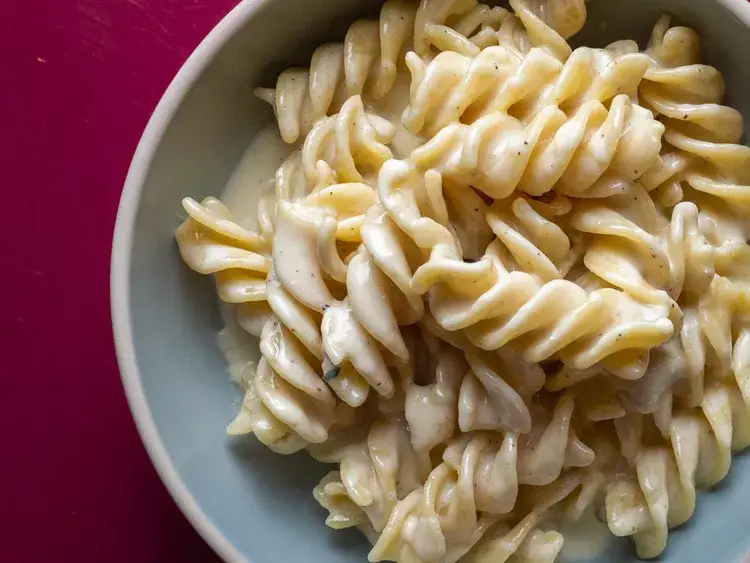
Pasta Ai Quattro Formaggi (Creamy Four-Cheese Pasta)
When making pasta ai quattro formaggi, Italy's answer to mac and cheese, the question that immediately comes up is: which four cheeses should I use? Most versions of the four-cheese pasta track similarly, though with one major adjustment: leave the mozzarella out of the equation. It melts well on a pizza, offering its characteristic milky stretch, but fails for exactly that same reason when the goal is to build a smooth and creamy cheese sauce for pasta.In place of the mozzarella, many recipes use Taleggio, which, is one hell of a melter, requiring no help at all from common cheese-sauce additives like flour to maintain a smooth, grease-free emulsion when heated in milk or cream. Taleggio has the added benefit of bringing some serious funky flavor to the cheese foursome, something that milky mozzarella, as much as I love it, can't pretend to do.With Taleggio forming the cheesy-sauce base, the next step is to build in layers of flavor and texture. Popular choices include an Alpine cheese like Fontina, Swiss, or Gruyère that are good for melting. They add nuttier, sweeter, butterier, and earthier notes to the sauce, especially the more flavorful ones like a good Gruyère or real Italian Fontina.After that, the remaining cheeses most likely to go into the sauce are, just like the pizza, blue gorgonzola dolce—one of my all-time favorite cheeses, and one that's so eager to melt it starts flowing at room temp—and a finely grated aged Parmesan, a pasta classic that would be an insult to leave out.Choose your four cheeses wisely for this bold, well-rounded, deeply flavorful, multi-layered, and complex cheesy pasta. No matter which four cheeses you end up choosing, quattro formaggi is at its best when you layer cheeses of different textures and flavors, making good on the recipe name's boastful promise. After all, no one wants a four-cheese pasta that tastes one-note.
Servings: 4
Ingredients
- 1 cup heavy cream (240 ml)
- 2 sprigs fresh thyme
- 1 medium clove garlic lightly smashed
- ½ teaspoon freshly ground black pepper
- 3 ounces rind-free Taleggio (85 g), cut into roughly 1-inch chunks (about 1/2 cup)
- 3 ounces grated Fontina or Gruyère, (85 g), (about 1 loosely packed cup)
- 1½ ounces finely grated Parmigiano-Reggiano (40 g, about 1/2 cup), plus more for serving
- kosher salt
- 1 pound dried fusilli penne, or other short pasta, (450 g)
- 3 ounces gorgonzola dolce (85 g), broken into roughly 1-inch pieces (about 3/4 cup)
Instructions
Infuse the cream:
- In a 3-quart saucepan, saucier, or other medium pot, combine the cream with the thyme, garlic, and black pepper.
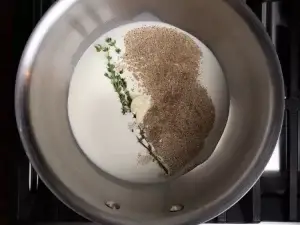
- Bring to a simmer over medium heat, stirring and scraping the bottom of the pan with a flexible spatula to prevent scorching, then remove from the heat and let steep 5 minutes.
- Remove and discard the garlic and thyme.

Make the cheese sauce:
- Return the infused cream to low heat and add the Taleggio, whisking constantly until the Taleggio is fully melted.
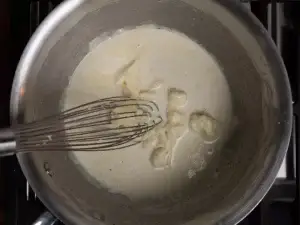
- Add the grated Gruyère (or Fontina) and continue to whisk until fully melted and a smooth sauce forms.
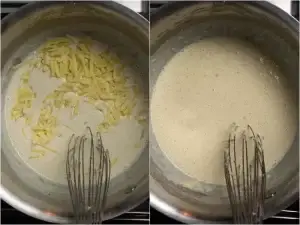
- Whisk in the Parmigiano-Reggiano cheese.
- Keep warm.


Cook the pasta and incorporate the cheese sauce:
- Meanwhile, in a pot of salted boiling water, cook the pasta until al dente.
- Using a spider skimmer, transfer the pasta to the cheese sauce; alternatively, strain the pasta in a colander, making sure to first reserve 1 cup (240ml) of pasta-cooking water.
- Add 1/4 cup (60ml) of pasta-cooking water to the pasta and sauce and, working over medium-low heat, stir gently until the pasta is coated in a creamy glaze. If the sauce becomes too thick, add more pasta water, 1 tablespoon (15ml) at a time, to loosen to a proper glazing consistency.
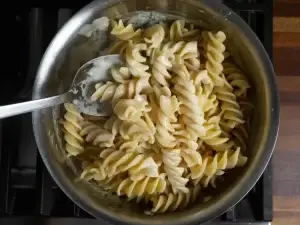
- Season with salt to taste.

Finish with gorgonzola and serve:
- Remove from the heat and stir in the gorgonzola; it may completely melt into the sauce, but it's fine (arguably even desirable) if some pieces remain mostly intact.
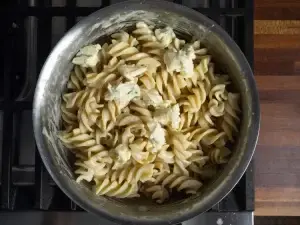
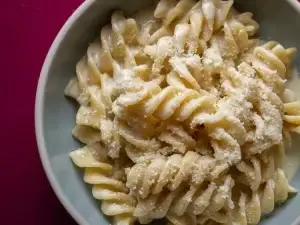
- Serve right away, passing more grated Parmigiano-Reggiano at the table.


Notes
- Be sure to use blue gorgonzola dolce (the creamy, spreadable kind).
- I mix the gorgonzola in last, so that it doesn't fully melt and little bits of it cling to the finished pasta (if it all melts, though, that's fine too).
- If you do replace the blue with a different type of cheese, just be sure to incorporate it at the appropriate time in the process, either along with the Taleggio, if it's a second melty spreader, or when whisking in the Alpine cheese, if you're doubling up on that.