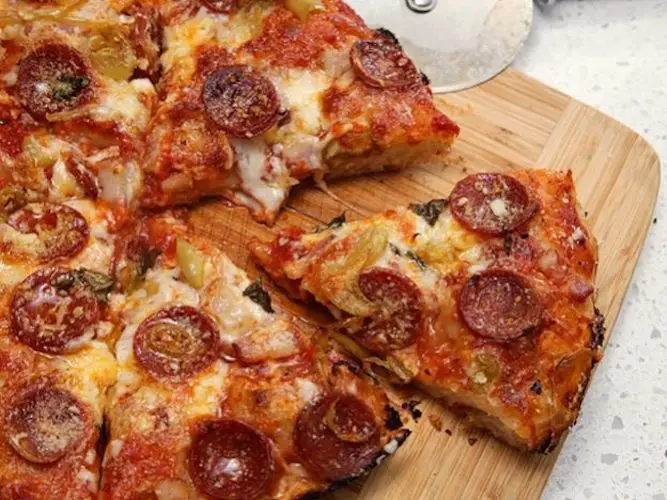
Foolproof Pan Pizza
A pan pizza recipe for those who love a thick and crispy crust that's golden on the bottom, but puffy and soft under the layers of sauce and mozzarella.With a hot oven and a cast iron pan, the crust bakes up deeply golden and crisp. Shredded, low-moisture mozzarella keeps the pizza crisp and light.
- A long, slow rise is a hands-free way to develop maximum flavor and chewiness in the crust.
Servings: 2 10" Pizzas
Ingredients
- 400 grams bread flour 14 ounces; about 2 1/2 cups, plus more for dusting
- 10 grams kosher salt 0.35 ounces; about 2 teaspoons, plus more for sprinkling
- 4 grams instant yeast 0.15 ounces; about 1 teaspoon, such as SAF Instant Yeast
- 275 grams water 9.5 ounces; about 1 cup plus 3 tablespoons
- 8 grams extra-virgin olive oil 0.25 ounces; about 2 teaspoons, plus more to coat pans and for drizzling
- 1½ cups pizza sauce such as our New York–style pizza sauce
- 12 ounces full-fat low moisture mozzarella cheese grated (see note)
- toppings as desired
- small handful torn fresh basil leaves optional
- 2 ounces grated Parmesan or Pecorino Romano cheese
Instructions
Mix and Proof:
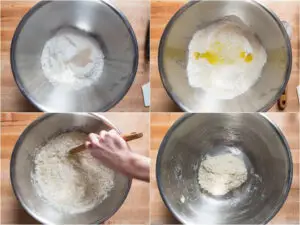
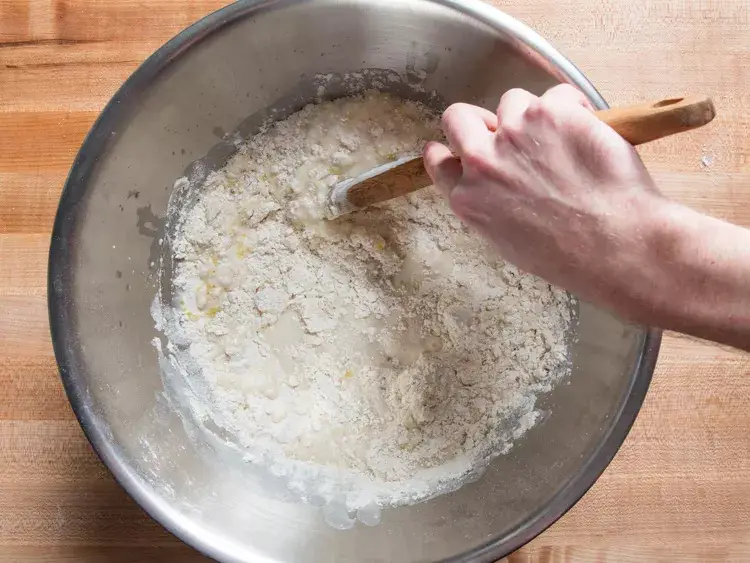
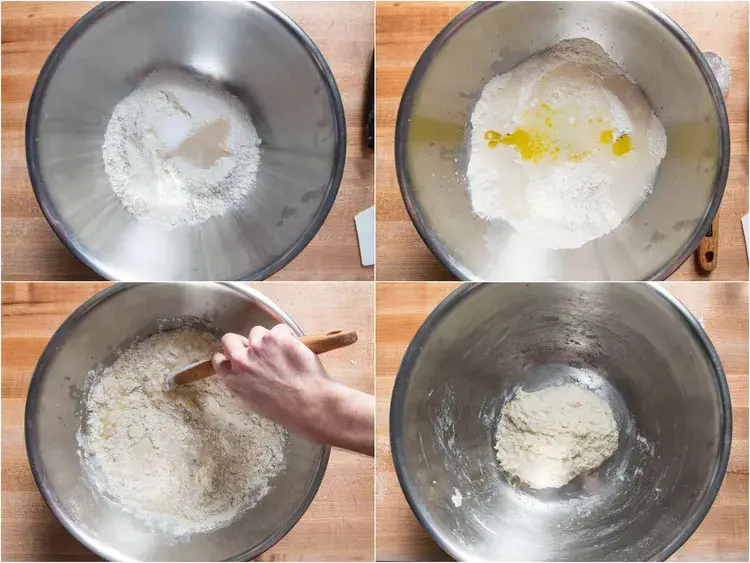
- Combine the flour, salt, yeast, water, and oil in a large bowl.
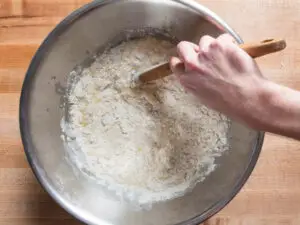
- Mix with hands or a wooden spoon until no dry flour remains. (The bowl should be at least 4 to 6 times the volume of the dough to account for rising.)
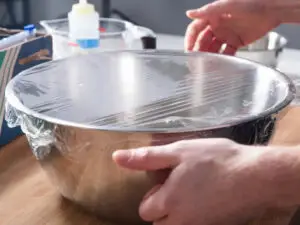
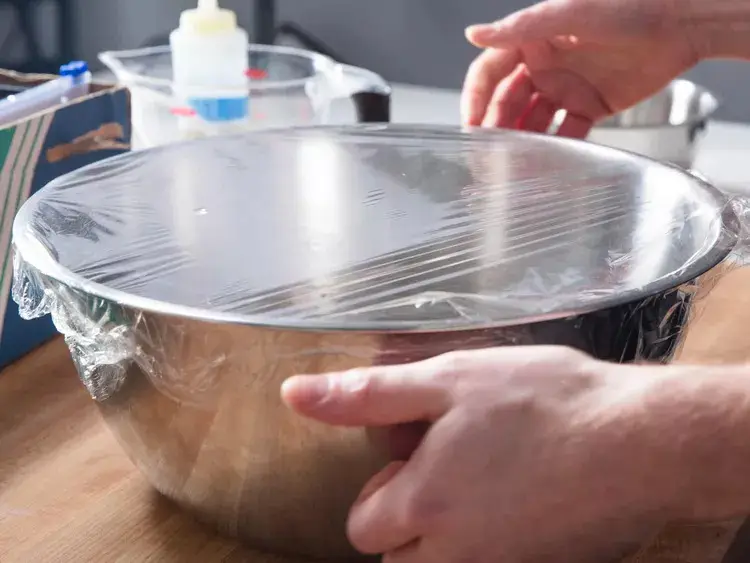
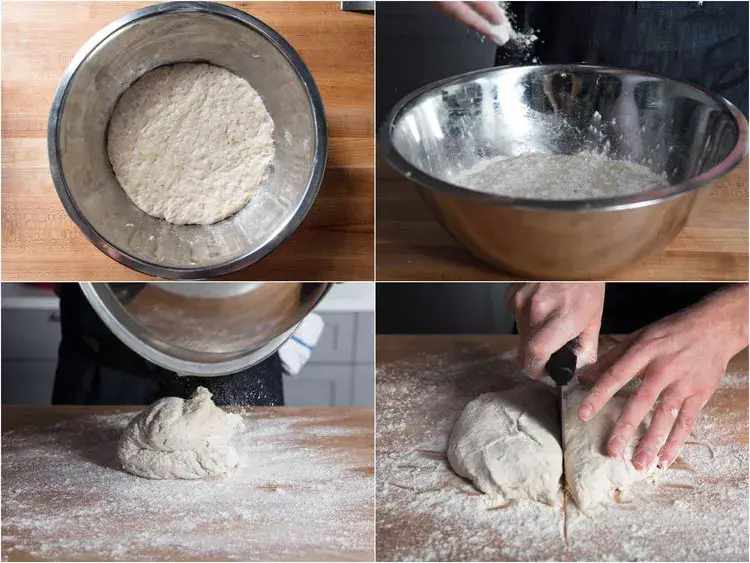
- Cover the bowl tightly with plastic wrap, making sure that the edges are well sealed, then let rest at cool room temperature (no warmer than 75°F) for at least 8 hours and up to 24. The dough should rise dramatically and fill the bowl. In a hot kitchen, the dough may overproof near the end of that range.
Ball the Dough:
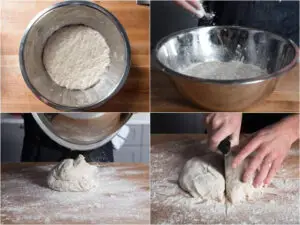
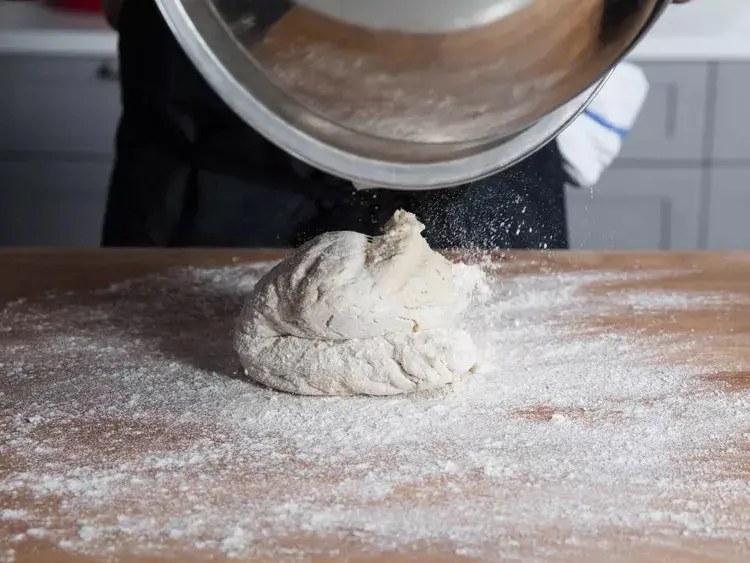
- Sprinkle the top of the dough lightly with flour, then transfer it to a well-floured work surface.
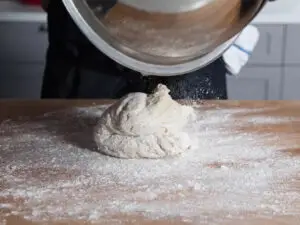
- Divide the dough into 2 pieces.
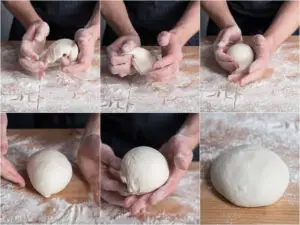
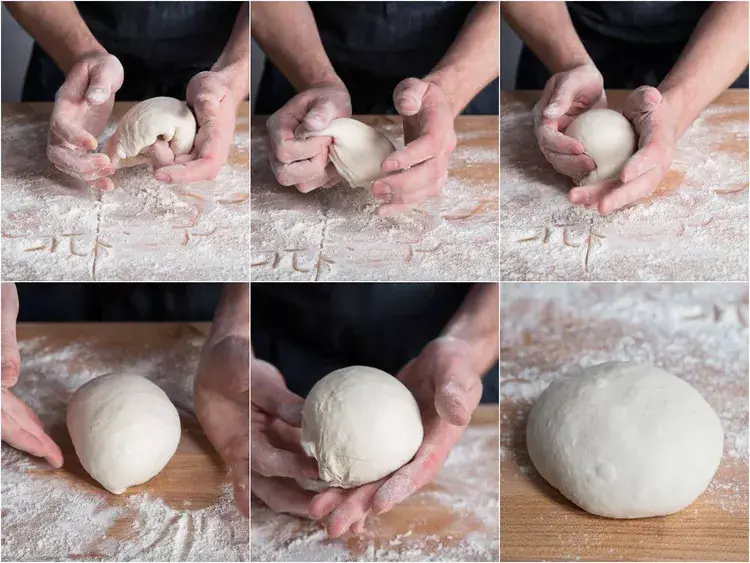
- Form each piece into a ball by holding it with well-floured hands and tucking the dough underneath itself, rotating it until it forms a tight ball.
Proof Dough in Cast Iron Pan:
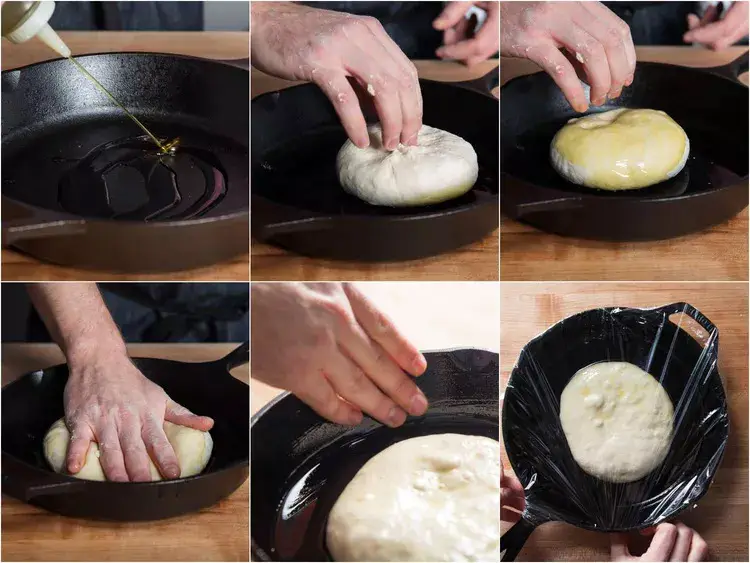
- Pour 1 to 2 tablespoons of olive oil in the bottom of two 10-inch cast iron skillets or round cake pans (see note).
- Place 1 ball of dough in each pan and turn to coat evenly with the oil.
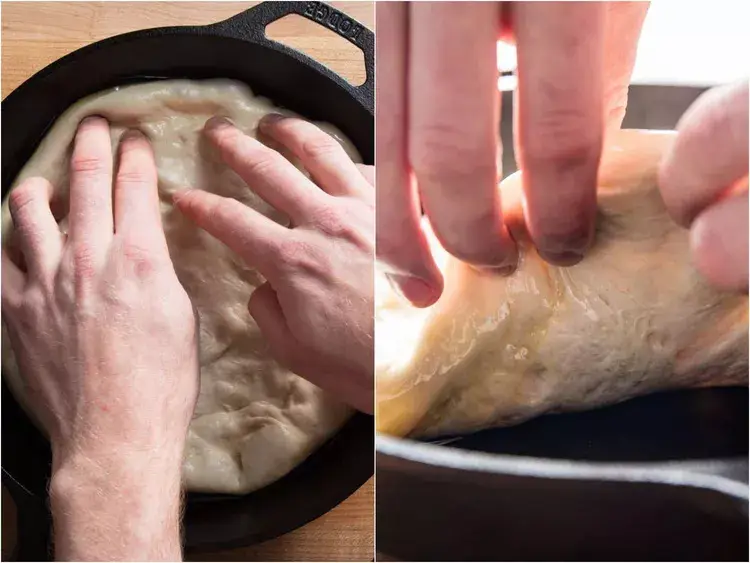
- Using a flat palm, press the dough around the pan, flattening it slightly and spreading oil around the entire bottom and edges of the pan.
- Cover tightly with plastic wrap and let the dough sit at room temperature for 2 hours (at room temperatures above 75°F, the dough may require less time to rise; at temperatures below 65°F/18°C, it may require more time). After the first hour, adjust an oven rack to the middle position and preheat oven to 550°F (290°C).
Touch Up the Dough:
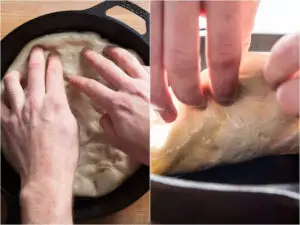
- After 2 hours, dough should be mostly filling the pan up to the edges. Use your fingertips to press it around until it fills in every corner, popping any large bubbles that appear.
- Lift up one edge of the dough to let any air bubbles underneath escape, then repeat, moving around the dough until there are no air bubbles left underneath and the dough is evenly spread around the pan.
Sauce the Dough:
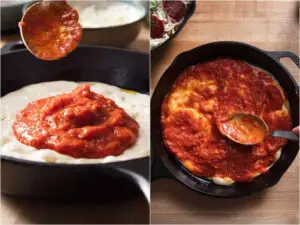
- Top each round of dough with 3/4 cup sauce, spreading sauce to the very edge with the back of a spoon.

Add Toppings:
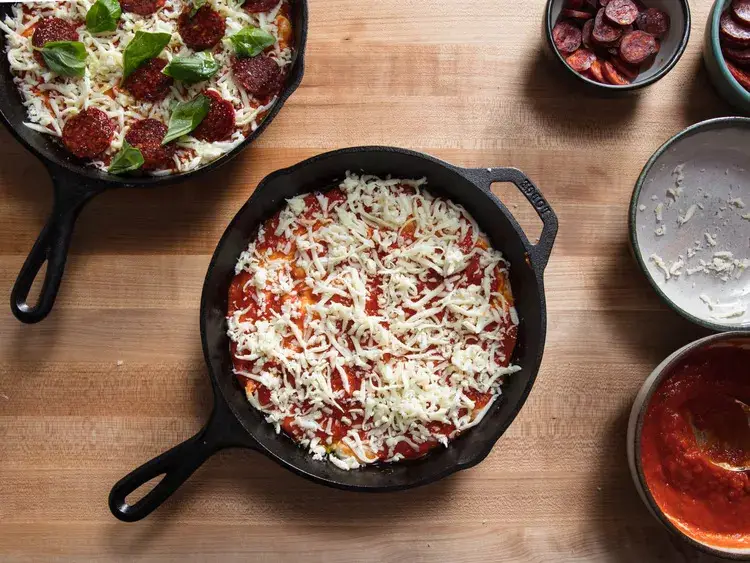
- Sprinkle evenly with mozzarella cheese, all the way to the edges.

- Season with salt.
- Add other toppings as desired.
- Drizzle with olive oil and scatter a few basil leaves over the top of each pizza, if desired.
Bake in a Hot Oven:
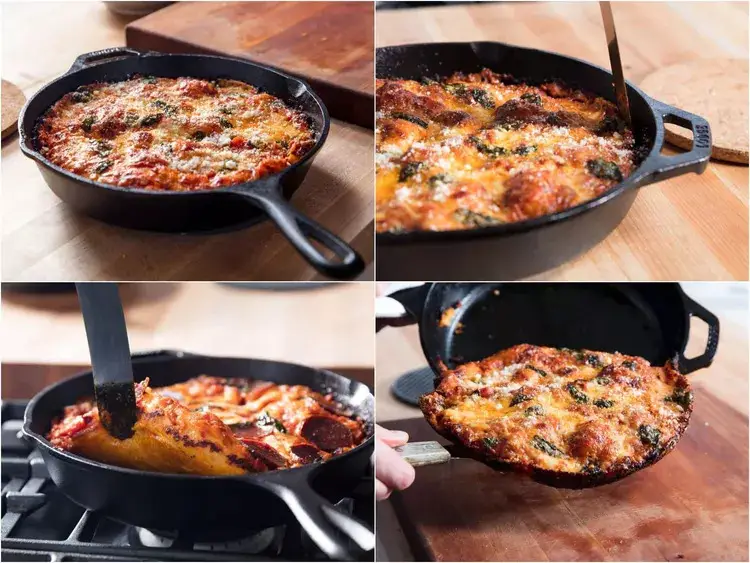
- Transfer the pans to the oven and bake until the tops are golden brown and bubbly and the bottoms are golden brown and crisp when you lift them with a thin spatula, 12 to 15 minutes.
Add Some Post-Bake Flair:
- Remove the pizzas from the oven and mmediately sprinkle with grated Parmesan or Pecorino Romano cheese, if using.
- Using a thin spatula, loosen the pizzas and peek underneath. If the bottoms are not as crisp as desired, place each pan over a burner and cook on medium heat, moving the pan around to cook evenly until it is crisp, 1 to 3 minutes.
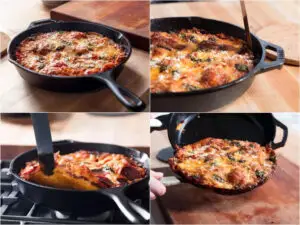
- Remove the pizzas and transfer to a cutting board, and let rest for a few minutes.
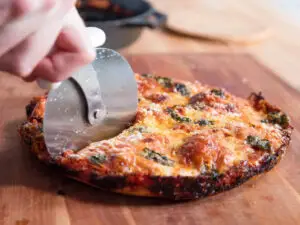
- Cut each pizza into 6 slices and serve immediately.

Notes
- Although mozzarella is standard, any good melting cheese, such as cheddar, Jack, or young provolone, will work for this recipe.
- This recipe is intended to be made with dry (aged) mozzarella cheese, the yellowish variety that comes in firm blocks. Do not use fresh mozzarella, as it is too moist.
- If you want to bake only one pizza at a time, you can transfer one ball of dough to a sealed zipper-lock bag or container in step 3 and store it in the refrigerator for up to three days. Continue with step 4 when ready to bake.
- For a single pie in a 12" cast iron pan use the "multiply recipe by .44 for a 12-inch" and "divide in half for 1" formula:
- 288 grams flour
- 7.2 grams salt
- 2.9 grams yeast
- 198 grams water
- 5.8 grams olive oil in recipe + more for pan