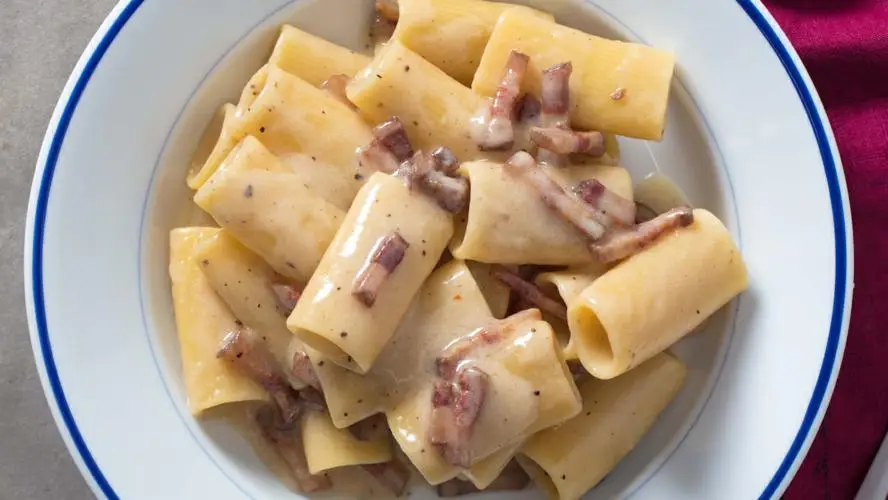
Guanciale, black pepper, Pecorino Romano, and pasta come together in a study of delicious minimalism.When it comes to the four main pasta dishes of Roman cuisine (carbonara, amatriciana, gricia, and cacio e pepe), pasta alla gricia is criminally overlooked and underappreciated. It's time to put an end to all that. It's time to celebrate the minimalist perfection of rigatoni dressed in a silky emulsion of rich guanciale fat and starchy pasta water. It's time to make gricia a household name.
Notes
- Slowly rendering guanciale yields crisp morsels of pork and plenty of flavorful fat to build an emulsified sauce.
- Cooking the pasta halfway in a small amount of water produces super-starchy pasta water that is ideal for emulsifying the sauce.
- Cooking the rigatoni the rest of the way in the skillet strengthens the emulsion, and the sauce glazes the pasta as it reduces.
Ingredients
- 8 ounces guanciale, in one piece - 225g
- 1 tablespoon extra-virgin olive oil - 15ml
- Kosher salt
- black pepper - freshly ground
- 12 ounces rigatoni - 340g
- 2 ounces Pecorino Romano cheese, plus more for serving - finely grated, 60g
Instructions
Prepare and cook the guanciale:
- Freeze guanciale for at least 15 minutes, and up to 45 minutes (partially freezing the guanciale makes it easier to slice).
- Using a sharp chef's knife, cut into 1/4-inch-thick planks, then cut planks into 1/4-inch-thick batons (lardons).
- In a large 12-inch stainless steel skillet, heat oil over medium-low heat until shimmering.
- Add guanciale and cook, stirring occasionally, until the fat has rendered and guanciale is golden brown and crisp, about 15 minutes.
- Using a slotted spoon, transfer guanciale to a plate; set aside.
- Reduce heat to low, and bloom about 1 teaspoon freshly ground black pepper in rendered guanciale fat until pepper foams and is aromatic, about 1 minute. Remove skillet from heat.
Cook the pasta:
- Meanwhile, in a Dutch oven or medium pot, bring 3 quarts of water and 2 teaspoons kosher salt to a boil over high heat.
- Set a colander inside a large heatproof bowl in the sink.
- Add rigatoni to water and cook, stirring frequently during the first minute to prevent pasta from sticking.
Begin the emulsion, finish and drain the pasta:
- Once the pasta has cooked for 4 minutes 30 seconds, transfer 2 cups (475ml) of starchy pasta water to skillet.
- Return skillet to high heat and bring to a boil, swirling to emulsify pasta water with guanciale fat.
- When pasta has cooked for a total of 5 minutes, drain in a prepared colander, then transfer pasta to the skillet (the pasta will be very undercooked at this point, but it will continue cooking in the skillet); reserve drained pasta water.
Finish the pasta and continue emulsion in the skillet:
- Cook rigatoni, swirling skillet constantly and gently stirring with a spoon or rubber spatula, to ensure even cooking and that the sauce remains emulsified, until pasta is al dente and sauce is thickened and reduced, 6 to 8 minutes; if the sauce reduces too much before the pasta has finished cooking, add more reserved pasta water to skillet in 1/4-cup increments.
Add guanciale and begin incorporating the Pecorino:
- Add guanciale to skillet and carefully toss to combine.
- Remove from heat, add half of the grated Pecorino Romano, and toss or stir rapidly to combine.
Finish and serve:
- Once the cheese is fully emulsified in the sauce, add remaining Pecorino Romano, and toss or stir rapidly once more to combine.
- Adjust sauce consistency as needed with more pasta water.
- Season with salt and pepper, if needed.
- Serve right away, passing more cheese at the table.
Nutrition
Calories: 808kcalCarbohydrates: 64gProtein: 22gFat: 51gSaturated Fat: 19gCholesterol: 75mgSodium: 952mgPotassium: 202mgFiber: 3gSugar: 2gVitamin A: 59IUCalcium: 169mgIron: 1mg