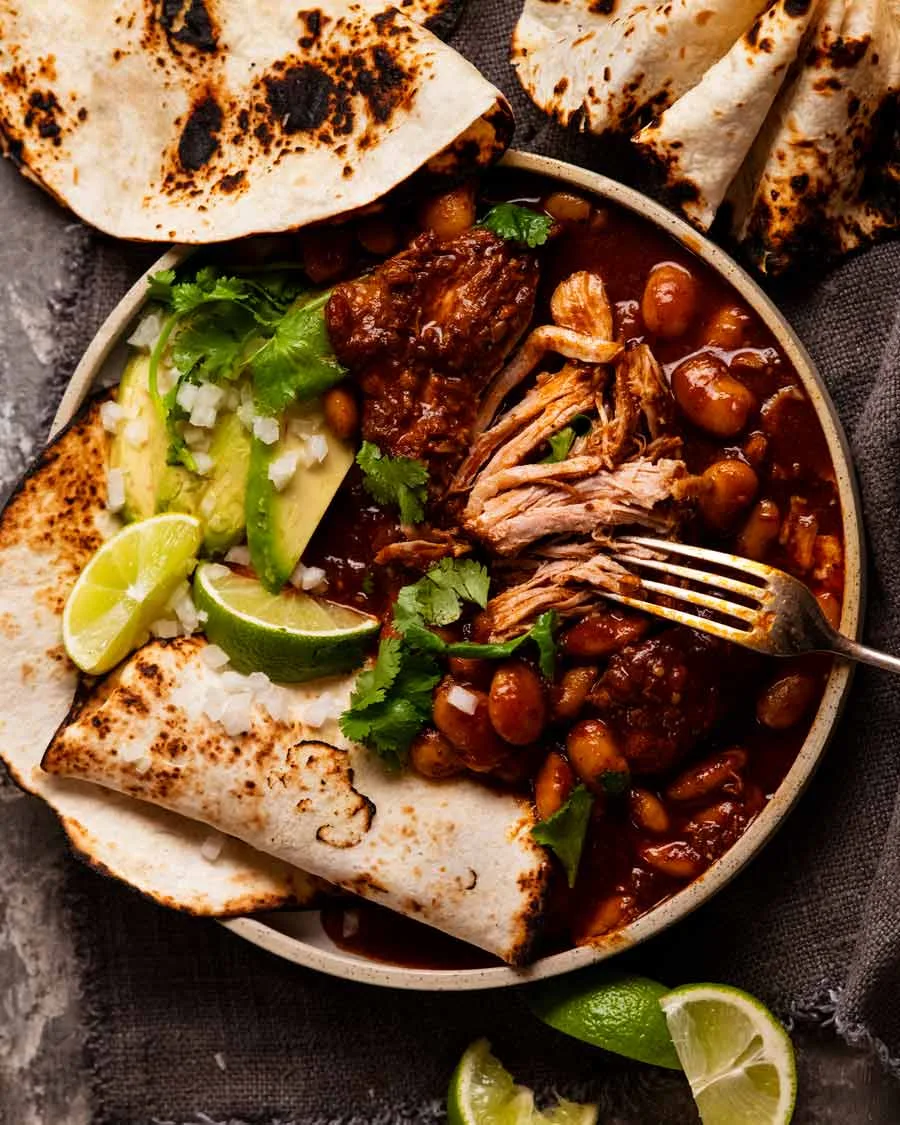
A hearty Mexican-inspired stew featuring tender chunks of pork shoulder, creamy Rancho Gordo Vaquero beans, and fresh Mexican chorizo in a rich ancho-guajillo chile sauce. Charred onions and garlic, fire-roasted tomatoes, and rendered chorizo fat add depth, while lime and cilantro brighten the finished dish.
Notes
Make-ahead and storage
This stew is an excellent make-ahead dish. The pork, beans, and chile sauce should become more integrated after a night in the refrigerator. Refrigerate promptly in shallow containers, within 2 hours of cooking. Store for up to 3–4 days or freeze portions for approximately 2–3 months for best quality. When reheating, add a splash of water or stock if the beans have absorbed too much liquid.Cook's notes
Pork shoulder versus country-style ribs: Boneless pork shoulder is my first choice for this recipe because it can be cut into consistent, generous pieces. Boneless shoulder-cut country-style ribs would work equally well. If using bone-in ribs, purchase approximately 2½–3 pounds to account for the bones. Chorizo selection: Use fresh, uncooked Mexican chorizo rather than cured Spanish chorizo. A moderately seasoned pork chorizo is ideal; an aggressively hot or heavily vinegared version may overwhelm the more subtle Vaquero beans. Chile intensity: The combination of two anchos and three guajillos should produce a deeply flavored but relatively mild sauce. The optional árbol chile provides additional heat. I'd omit it on the first attempt unless you particularly enjoy spicy food. Bean cooking liquid: The amount available will vary depending on how you cook the beans. Reserve as much as possible and use it preferentially over chicken stock. Its starch and flavor are valuable to the finished sauce. Pot size: A 6–7-quart Dutch oven should accommodate the recipe, although the finished volume will be substantial. Avoid adding all the suggested liquid automatically; use just enough to maintain a moist braise. A final recommendation: I would prepare this recipe essentially as written for the first attempt, particularly the two anchos, three guajillos, 15 ounces of tomatoes, and six ounces of chorizo. Those proportions should give us a good baseline for judging whether future versions would benefit from more chile intensity, less tomato, or a stronger chorizo presence.Ingredients
Beans
- 1 pound dried Rancho Gordo Vaquero beans - 454 g
- ½ medium white onion
- 2 cloves garlic - smashed
- 1 bay leaf
- Water - to cover by approximately 2 inches
- Kosher salt - to taste
Pork and chorizo
- 2 pounds boneless pork shoulder - 900 g, cut into 1½–2-inch cubes
- 6 ounces fresh Mexican chorizo - 170 g, casings removed if necessary
- 1-2 tablespoons avocado oil - as needed
- Kosher salt - to taste
- freshly ground black pepper - to taste
Red chile sauce
- 2 dried ancho chiles - stemmed and seeded
- 3 dried guajillo chiles - stemmed and seeded
- 1 dried árbol chile - optional, for heat
- 1 large white onion - peeled and cut into thick slices
- 6 cloves garlic - unpeeled
- 1 14–15 oz can fire-roasted diced tomatoes - with juices
- 1 teaspoon Mexican oregano
- ¼–½ teaspoon ground cumin - optional
- 1 jalapeño - seeded and finely diced, optional
- 1–2 cups low-sodium chicken stock - as needed
- 2–3 cups reserved bean cooking liquid - as needed
To finish and serve
- 1–2 teaspoons apple cider vinegar - as needed
- 1 lime - cut into wedges
- ½ cup chopped fresh cilantro
- Finely diced white onion - for garnish
- Warm corn tortillas
Instructions
Cook the Vaquero beans
- Rinse and sort the beans, removing any debris. Soaking is optional; Rancho Gordo beans generally cook well without it.
- Place the beans in a large pot with the half onion, smashed garlic cloves, and bay leaf. Add enough water to cover by approximately 2 inches.
- Bring to a boil, then reduce to a gentle simmer. Cover partially and cook until the beans are nearly tender but still have a little resistance in the center. Approximately 1½–2½ hours, depending on bean age and freshness
- Salt the cooking liquid once the beans begin to soften, adjusting until pleasantly seasoned.
- Remove from the heat. Discard the onion, garlic, and bay leaf. Reserve all the bean cooking liquid.
- The beans should be approximately 85–90% cooked at this stage. They will finish cooking in the pork braise.
Prepare the dried chiles
- Remove the stems and seeds from the ancho and guajillo chiles. Include the árbol chile if using.
- Heat a dry skillet or comal over medium heat.
- Toast the chiles briefly, pressing them against the skillet for approximately 10–15 seconds per side, until fragrant and slightly pliable. Avoid scorching.
- Transfer to a bowl and cover with very hot water.
- Let soak for 15–20 minutes, until softened.
- Drain, reserving a little soaking liquid if desired. Taste it before using, as it can be bitter.
Char the onion and garlic
- Heat a cast-iron skillet or comal over medium-high heat.
- Place the thick onion slices and unpeeled garlic cloves directly on the dry surface.
- Cook, turning occasionally, until the onions develop dark brown patches and soften slightly, and the garlic is lightly charred.
- Allow the garlic to cool enough to handle, then peel it.
- The goal is a combination of caramelized sweetness and a little char, not thoroughly blackened vegetables.
Brown the pork
- Pat the pork shoulder dry with paper towels.
- Season generously with kosher salt and lightly with black pepper. For best results, salt the pork the night before and refrigerate uncovered.
- Heat a 6–7-quart Dutch oven over medium-high heat. Add approximately 1 tablespoon avocado oil.
- Brown the pork in two or three batches, turning until several sides develop a deep golden-brown crust.
- Transfer the browned pork to a bowl, reserving any accumulated juices.
- Do not cook the pork through at this stage. We're developing fond and flavor.
Brown the chorizo
- Reduce the Dutch oven heat to medium.
- Add the fresh Mexican chorizo, breaking it into small pieces with a wooden spoon.
- Cook until the chorizo is browned and its orange-red fat has rendered.
- Transfer the chorizo to a separate bowl using a slotted spoon.
- Leave approximately 2–3 tablespoons of the combined pork and chorizo fat in the Dutch oven. Remove excess fat if necessary. This seasoned fat will form the foundation of the sauce.
Blend the red chile sauce
- Combine the following in a blender:
- - Rehydrated ancho and guajillo chiles
- - Charred onion and peeled garlic
- - Approximately half the fire-roasted tomatoes, including some of their juices
- - Mexican oregano
- - Ground cumin, if using
- - Approximately ½–1 cup reserved bean cooking liquid
- Blend until very smooth, approximately 1–2 minutes depending on the blender.
- The sauce should be thick but pourable. Add a little more bean liquid if necessary.
- For an especially silky sauce, pass the purée through a fine-mesh strainer to remove any remaining chile skin fragments.
Fry the chile sauce
- Return the Dutch oven to medium heat.
- Add the finely diced jalapeño, if using, and cook for approximately 1 minute.
- Carefully pour in the blended chile sauce. It may splatter.
- Cook, stirring frequently, for 8–10 minutes.
- The sauce should darken slightly, become more aromatic, and thicken considerably. This is an important step. Frying the purée in the seasoned pork and chorizo fat develops a richer, more integrated chile flavor.
Braise the pork
- Return the browned pork and its accumulated juices to the Dutch oven.
- Add the remaining fire-roasted tomatoes and their juices.
- Add approximately 1½ cups reserved bean cooking liquid and 1 cup chicken stock, adjusting as needed so the pork is mostly submerged.
- Stir gently to distribute the sauce.
- Bring to a gentle simmer, then reduce the heat to low.
- Cover partially and cook for approximately 75–105 minutes, stirring occasionally, until the pork is becoming tender but is not yet falling apart.
- Keep the liquid at a gentle simmer rather than a vigorous boil. Add a little more stock or bean liquor if the sauce becomes too thick.
Add the beans and chorizo
- Add the nearly cooked Vaquero beans and reserved browned chorizo to the Dutch oven.
- Stir gently, taking care not to break up the beans.
- Add additional bean cooking liquid as needed to achieve a loose stew consistency.
- Continue simmering partially covered for 20–40 minutes, until the beans are completely tender and the pork can be easily pierced with a fork.
- During this final cooking stage, the beans will release some starch into the sauce, while gelatin from the pork enriches the braising liquid.
- If the sauce is too thin, remove the lid and simmer gently until reduced. If too thick, add reserved bean liquor a little at a time.
Finish and adjust seasoning
- Remove the Dutch oven from the heat.
- Taste the stew before making final adjustments. Mexican chorizo varies considerably in salt, spice, and acidity.
- Adjust in this order:
- Salt: Add kosher salt as needed to bring the pork, beans, and sauce into balance.
- Acidity: Add 1 teaspoon apple cider vinegar, stir, and taste. Add another teaspoon if the sauce needs brightness.
- Richness: If excessive fat has collected on the surface, skim off a little.
- Consistency: Adjust with additional bean liquid or reduce briefly if necessary.
- Stir in approximately half the chopped cilantro, reserving the remainder for serving.
- Let the stew rest for 10–15 minutes before serving.
Serving
- Ladle the stew into warm bowls, making sure each serving contains generous pieces of pork, Vaquero beans, and plenty of red chile sauce.
- Garnish with chopped cilantro, finely diced white onion, and a squeeze of fresh lime. Serve with warm corn tortillas.