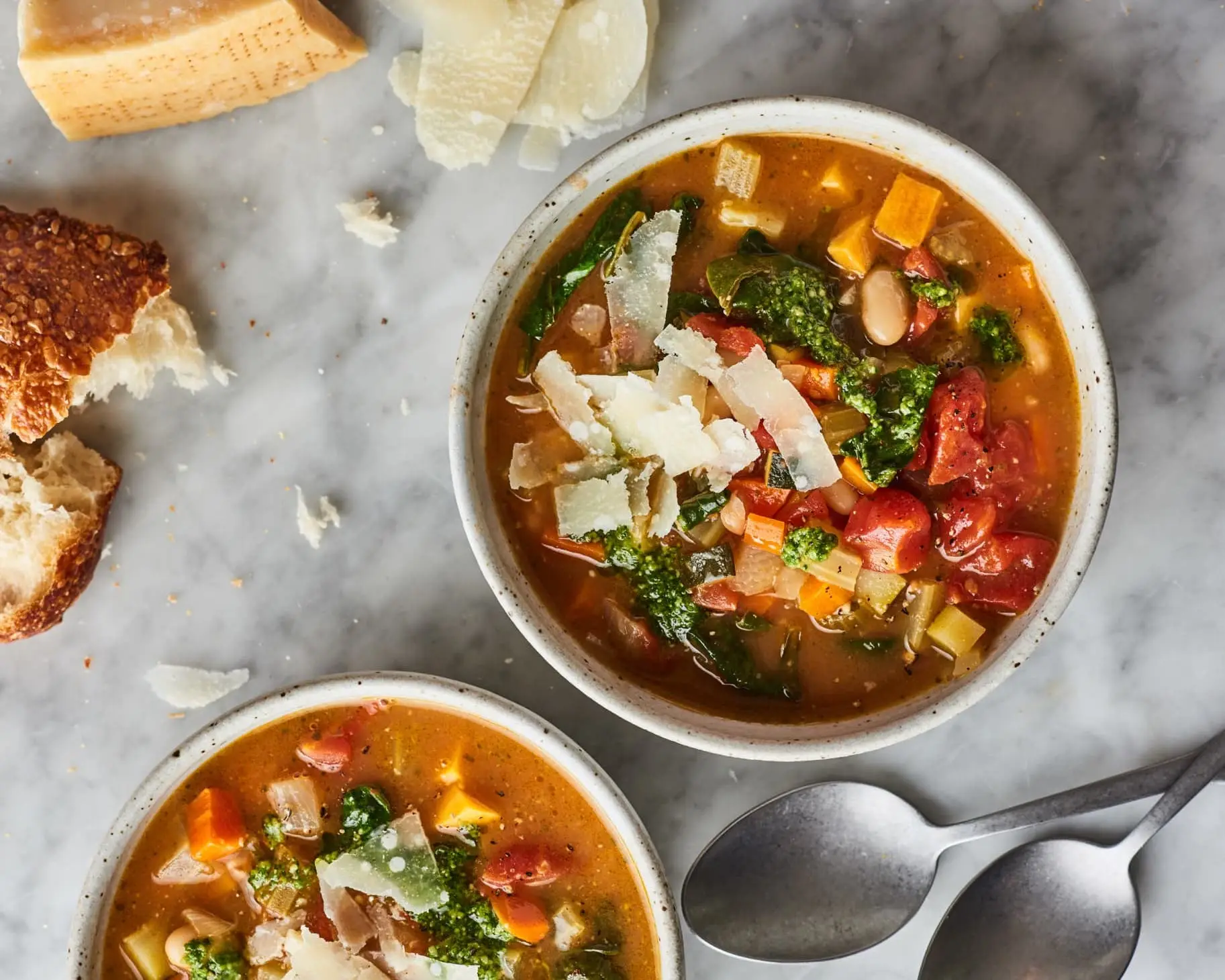
This classic minestrone boasts hearty vegetables in a tomato-herb broth, finished with a swirl of bright green pesto. Serve with crusty chunks of bread and shavings of Parmesan cheese for a cozy winter dinner. This minestrone recipe embraces the variety of vegetables available year-round, so it’s just the thing to make whether you’re shoveling out from a snowstorm mid-January or escaping a blustery and rainy day at the end of March.Essentially, minestrone is a thick, hearty variety of vegetable soup, thanks to the addition of beans and sometimes pasta or rice. Tomatoes, carrots, onion, and celery are usually included, with other vegetables added at the cook’s discretion. There isn’t a hard-and-fast rule on which vegetables must be present to make it minestrone — different regions of Italy use different vegetables, and the soups change with the season. The minestrone soup I’ve been serving for years began as Ina Garten’s Winter Minestrone soup, but since I can’t help but tinker with a recipe, it has since morphed into my own. I often skip the pancetta, and substitute whatever melange of vegetables I have in the crisper drawer. But there are two components of Ina’s recipe that I never skip: flavoring the broth with a generous scoop of pesto and serving the thickened soup with crusty bread.
Notes
3 Tips for Making Minestrone Soup You Actually Want to Eat
- Cook vegetables in stages. The key to a soup that actually has texture (and isn’t just a broth filled with mushy vegetables) is to add the vegetables in stages. Begin with a mirepoix — the classic trio of onion, celery, and carrot — which boosts the flavor of the store-bought broth. Next, add long-cooking, dense vegetables, like sweet potatoes or winter squash. Finally, stir in tender vegetables, like zucchini and garlic (which are prone to burning). You’ll cook each round until the vegetables brighten in color and just begin to soften, about 3 minutes.
- Add flavor at every step. Sautéing the vegetables in both olive oil and butter adds richness and body to the soup from the get-go. Adding in a Parmesan rind gives the broth a big boost, as does store-bought pesto. Pesto is packed with concentrated flavor, thanks to chopped herbs, nuts, and cheese. It also gives the soup a rich consistency.
- Leave out the pasta (or serve it on the side): Many minestrone recipes are made with short pasta, but here, we opt for creamy cannellini beans. Pasta can absorb a lot of the broth, especially if you’re storing leftovers or freezing the soup, making it mushy. But if you insist on noodles in your soup, cook short noodles (I recommend ditalini or macaroni) separately and stir them into the soup upon serving.
Storing Minestrone Soup
- This soup will thicken in the refrigerator as the residual heat of the broth continues to cook the vegetables and they release their starches, so stir in another splash of broth when you reheat leftovers.
- If you’re meal prepping this soup or making it ahead of time, cool the soup, then pack into deli containers or ladle into freezer-safe zip-top bags. Lay the bags flat on a baking sheet and freeze. Once solid, they can be stored vertically in the freezer where they take up less space and are easy to thaw.
Ingredients
- 2-4 tablespoons olive oil
- 2 tablespoons unsalted butter
- 1 pound Italian sausage - optional
- 1 large yellow onion
- 1 tablespoon fennel seeds
- 1 tablespoon Italian seasonings
- 6 medium stalks celery
- 1 large zucchini
- 1 large yellow squash
- 3 medium carrots
- 1 medium sweet potato
- 5 cloves garlic - kept whole
- 4 cups prepared beans - from about 1-½ cups dried or 2 (15-ounce) cans, such as borlotti, cannellini or Great Northern
- 2 teaspoons kosher salt - plus more for seasoning
- 1 2x3-inch Parmesan rind
- 1 28-ounce can diced tomatoes
- 6 cups vegetable broth
- 1 cup frozen green beans
- 1 cup frozen corn
- 1 tablespoon Worcestershire sauce
- 1 tablespoon lemon juice - from about a half of a lemon
- 4 tablespoons basil pesto - plus more for serving
- 4 cups baby spinach or baby kale
- Parmesan cheese - for serving
- Crusty bread - for serving
Instructions
Prepare the beans and vegetables:
- If using Italian sausage, remove from casings, if applicable and portion into approximately 1-inch pieces.
- If using dried beans, brine overnight and cook until just cooked through. If using canned beans, drain, rinse, and set aside.
- Dice the onion and sweet potato into 1/2-inch pieces, keeping them separate.
- Dice the celery and carrot into 1/2-inch pieces, combined.
- Cut the zucchini and yellow squash into 1-inch pieces, combined.
Sauté the sausage (if using):
- If using sausage, place 2 tablespoons of olive oil in a Dutch oven over medium-high heat until shimmering.
- Add the sausage and cook until starting to brown.
- Remove the sausage with a slotted spoon and set aside.
Sauté the vegetables:
- Place 2 tablespoons olive oil and 2 tablespoons unsalted butter in a large stockpot or Dutch oven over medium-high heat.
- Once the butter melts and begins to sizzle, add the onion and 1 teaspoon kosher salt, and sauté until softened but not browned about 3 minutes.
- Stir in the fennel seeds and Italian seasonings.
- Add the carrots and celery and cook until brightened in color, 3 to 5 minutes.
- Add the sweet potato and whole garlic cloves and sauté until slightly softened at the edges, about 3 minutes.
- Stir in the zucchini and yellow squash and cook until softened, about 2 minutes.
Add tomatoes, broth, and beans:
- Add the diced tomatoes and their juices, 6 cups vegetable broth, and the beans.
- Stir in the Parmesan rind and bring to a boil over medium-high heat.
- Reduce the heat to medium-low and simmer until the carrots and sweet potato are tender, 20 to 30 minutes.
Add the greens, season, and serve:
- Remove and discard the Parmesan rind.
- Stir in the greens and simmer until combined and the greens wilt.
- Stir in the Worcestershire sauce and lemon juice.
- Taste and season with salt and pepper as needed.
- Stir in 2 tablespoons basil pesto.
- Ladle the soup into bowls and serve with more pesto, shaved Parmesan, and crusty bread.